Build by day. Hold through the night.
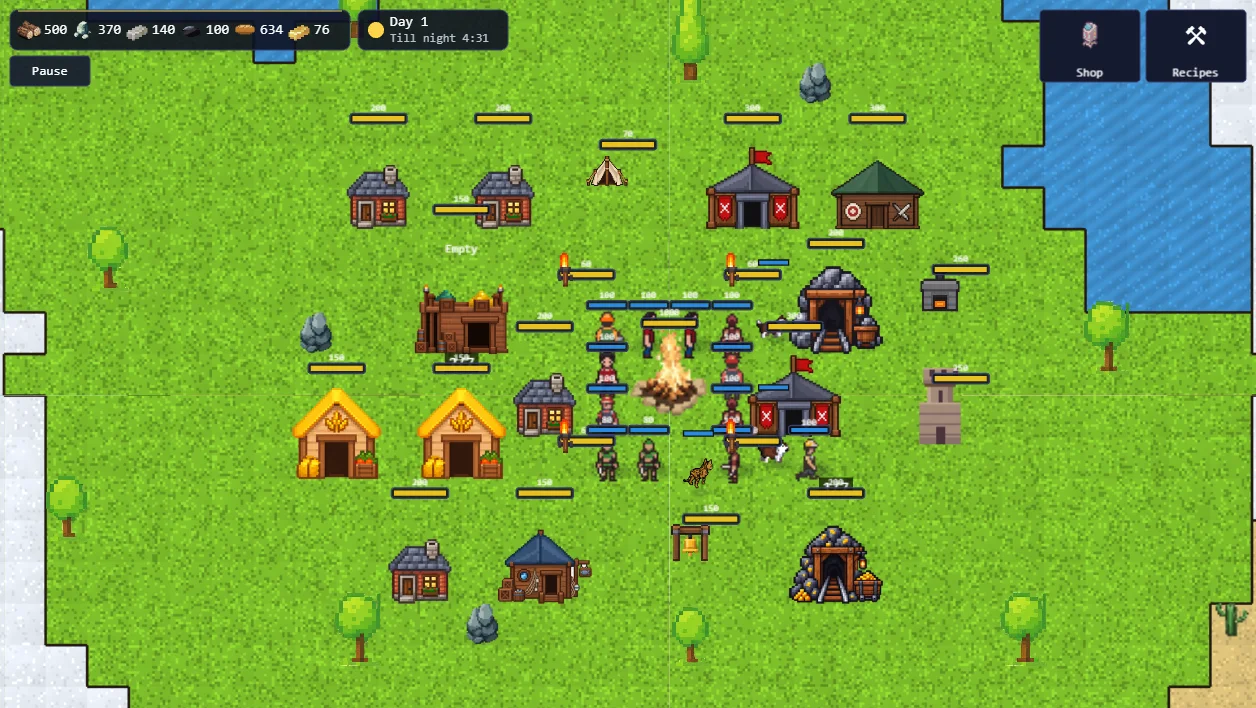
A top-down strategy game that runs in a browser tab. You start beside a campfire with a few people and whatever the map happened to put nearby. Everything after that — the houses, the farms, the wall, the warriors on it — you make out of the ground around you.
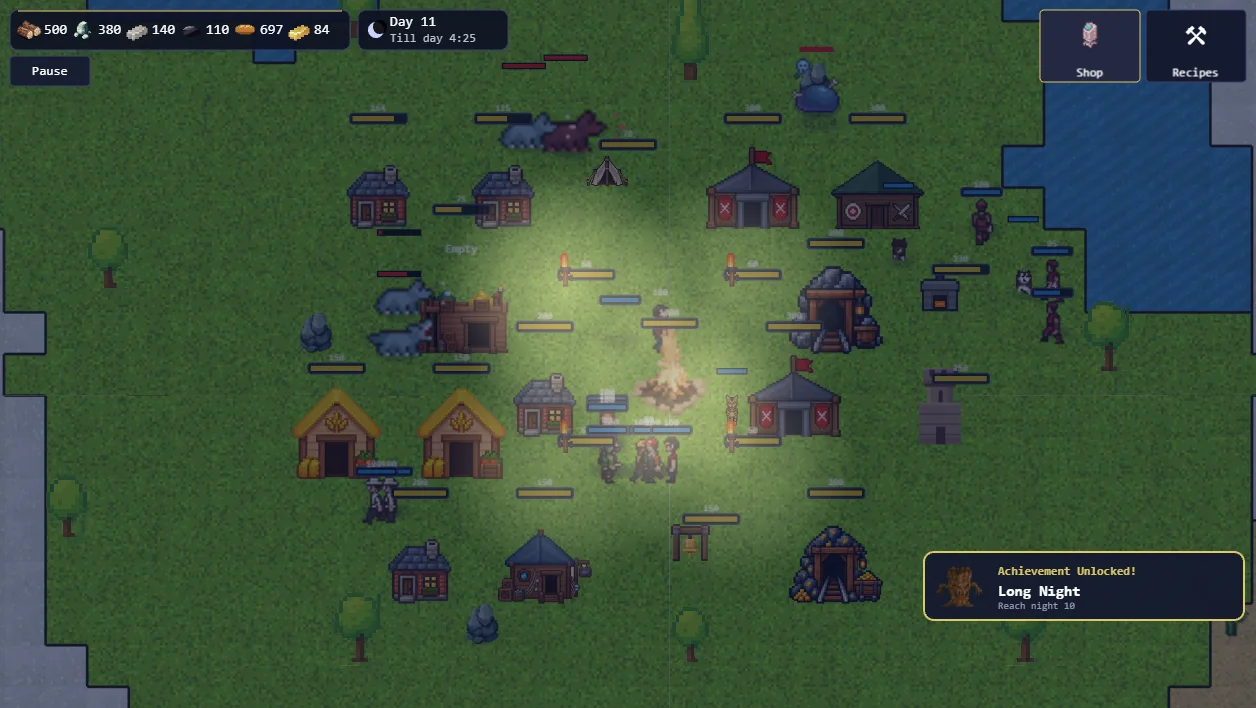
Sixteen seconds of a real world, filmed in the game: a camp at work, the sun going down, and wolves at the edge of the firelight.
Day 1 — till night 5:00
A villager can carry things and build. Anything else, they have to become: walk one onto the lumbermill and she is a lumberjack from then on, onto the barracks and he picks up a sword. A camp with no miner will never have a single stone, however long you leave it running.
Six things worth having — wood, stone, iron, coal, food, gold — and a different specialist for each. Send them out; they walk back on their own.
Twenty-four buildings, from a second house to a smelter, a watchtower, a war bell that calls every fighter home at once.
Your people go from level one to five, and the campfire with them — and every level of the fire lets the camp hold more people and more buildings.
The goal
There is no win screen. There is the camp, still standing at dawn.
Every night is something coming for it, and the question the game keeps asking is whether what you built today is enough for what walks in tonight. If you want a finish line, there are three:
Nightfall
The sun goes down on a clock you can watch, and the map goes with it. What you can see shrinks to the fire and whatever torches you put up, and wolves come in at the edge of it — then slimes that split in two every time you hit them, and later things with names.
Ring the war bell and every warrior, thrower, dog and golem you have drops what it is doing and comes back. That is usually the difference.
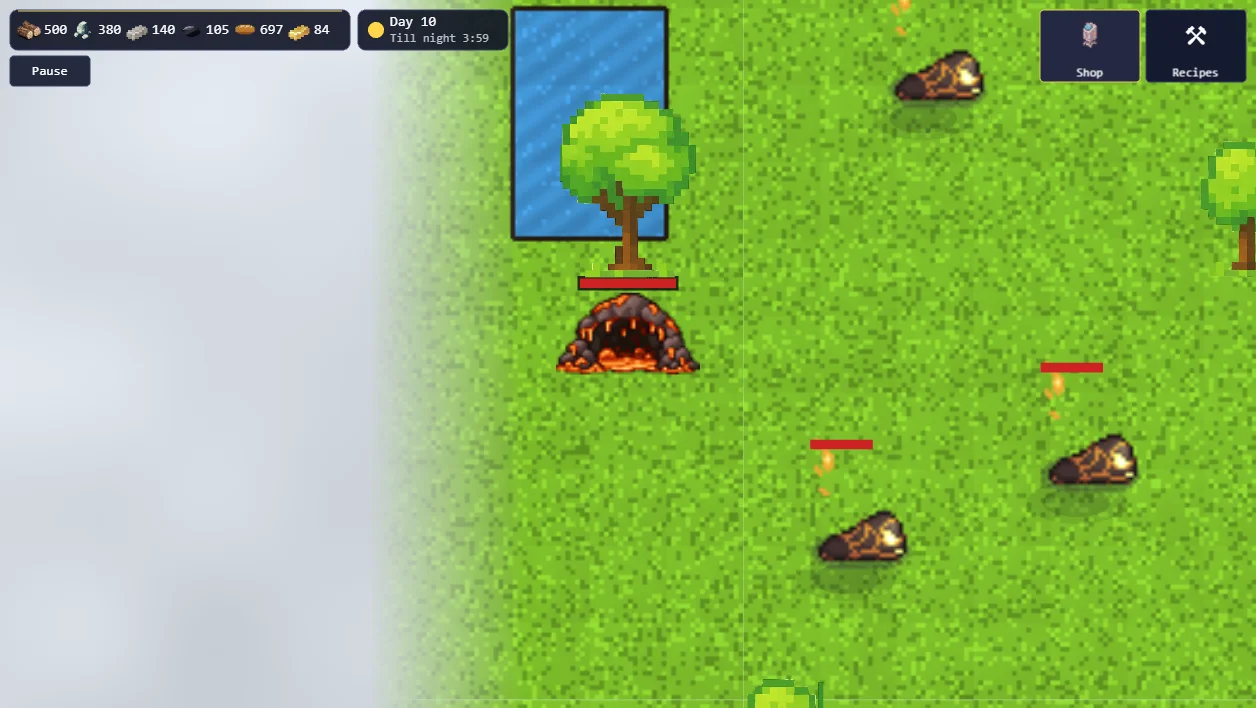
Day 10
From day ten, holes start opening in the far corners of the map — a wolf den, a slime cave, and one magma cave, whose slimes set alight whatever they touch. Each one standing makes the nights come faster.
So they are the one lever you have on the weather. March a party out, take one down, and that night is quieter — not because the difficulty dropped, but because you went and did something about it.
Each kind rolls once a day for a place on your map, one chance in ten, so no two worlds end up with the same map of them.
Every world
Twenty lessons that hand you the game one piece at a time, each with its own small world and its own task.
Up to four camps in one map, allied or not, trading resources across it. Everyone runs their own camp; the world keeps the score.
Draw your own map — terrain, trees, buildings, survivors — and hand it to a friend with a six-digit code.
From felling your first tree to holding a hundred of every resource at once, with profile pictures to unlock.
Five map sizes up to 530 tiles a side, five difficulties, and world types from a plain forest to an island or a blind map.
Add it to a phone's home screen and it plays offline, landscape, with touch controls made for a thumb rather than a mouse.
No account, no download. The tutorial is the first lesson of Camp Leveling, and it starts with one click.